

Bespoke IP strategy, built for real-world performance.
Commercially driven and endgame-focused, we guide decisions across the IP lifecycle, from portfolio development through risk and enforcement, to support long-term value.
Building Durable Competitive Advantage
Helping innovative companies make informed decisions about what to build, what to protect, and how intellectual property supports long-term business objectives.
Hylton-Rodic Law is a Washington, D.C.–based intellectual property firm that works with innovative companies operating in complex scientific and technical environments where intellectual property is closely tied to value creation, market position, and growth.
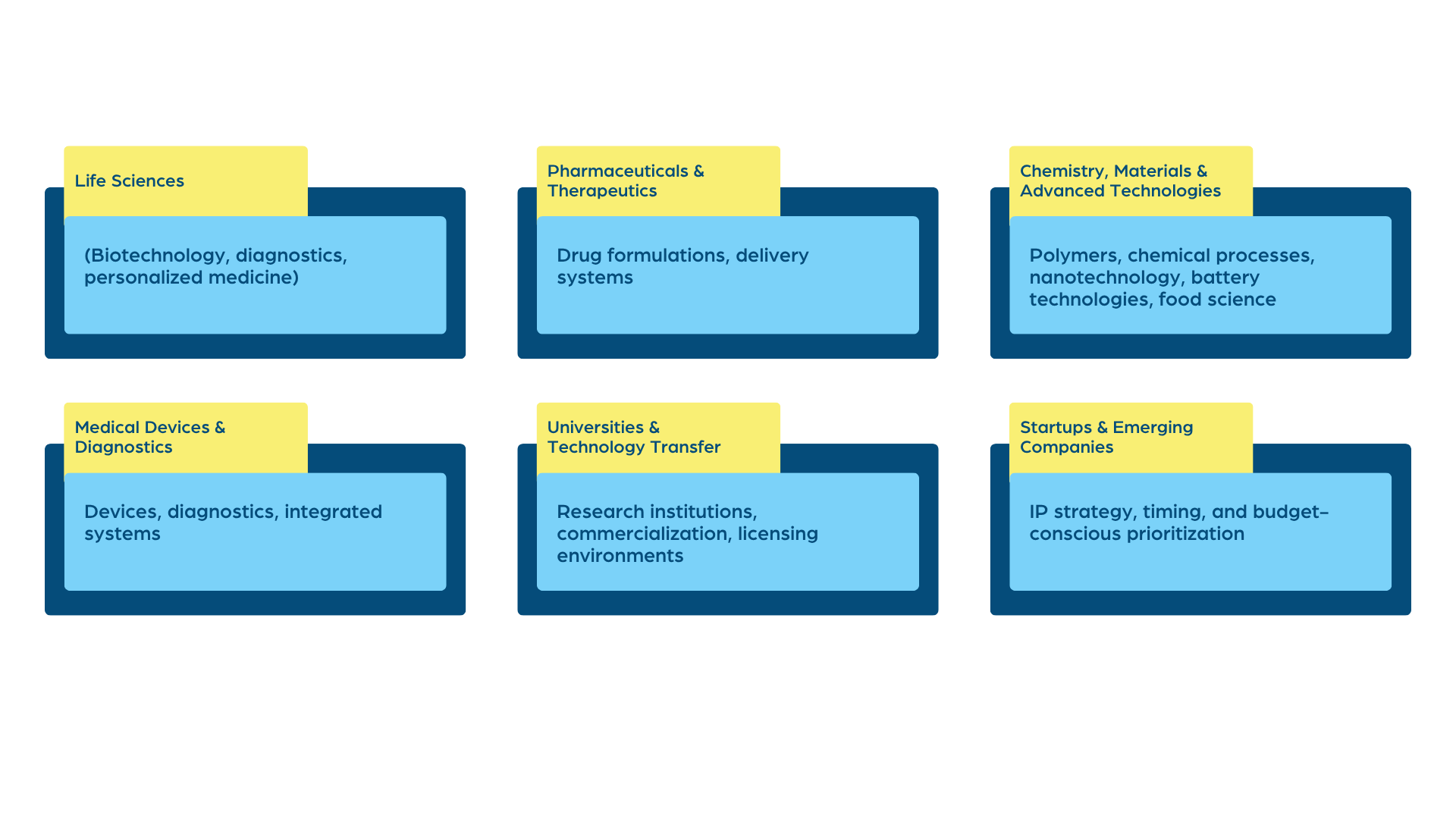
Our clients include biotechnology companies, pharmaceutical companies, chemical companies, research institutions, universities, and founder-led companies developing new technologies. Increasingly, we work with scientific leadership teams navigating the opportunities and challenges created by AI-driven discovery and emerging technologies.
Our work is grounded in a simple principle: intellectual property is not a filing exercise. It is a strategic asset that should support business objectives, strengthen competitive positioning, and withstand scrutiny over time.
We help clients make informed decisions about what to build, what to protect, and how to create durable competitive advantage. Those decisions often begin long before a patent application is filed and continue throughout the lifecycle of a company, technology platform, or product portfolio.
Our counsel spans patent strategy, portfolio development, patent prosecution, freedom-to-operate analysis, competitive landscape assessment, and intellectual property planning aligned with commercial objectives. Whether supporting a growing biotech company, an established life sciences organization, or a research institution bringing innovation to market, we focus on aligning intellectual property strategy with long-term business goals.
Many of our clients do not maintain in-house intellectual property teams. In those situations, we serve as a dedicated external IP function, providing continuity across portfolio development, innovation strategy, and market expansion. For clients with established legal and IP departments, we work alongside internal teams to provide additional technical depth, strategic capacity, and execution support.
As advances in artificial intelligence continue to reshape how discoveries are made, companies face new questions regarding ownership, inventorship, defensibility, and value creation. We work with clients navigating these changes, helping ensure that intellectual property strategies evolve alongside scientific and commercial realities.
The focus is not volume. It is value, durability, and informed decision-making.
We help clients build intellectual property portfolios that support market entry, facilitate partnerships and licensing opportunities, strengthen competitive positions, and hold up when they matter most.

Where IP strategy carries real consequence
We focus on life sciences intellectual property and other technically complex fields where patent decisions influence market access, valuation, and long-term control.
IP Strategy in practice
We guide IP strategy across the full lifecycle, including patent strategy, patent prosecution strategy, portfolio management, freedom to operate analysis, and strategic opinion work.
IP is not a series of isolated tasks. Each engagement is structured around how protection will be used, evaluated, and challenged over time.
We align patent strategy with commercial objectives, shaping portfolios that support market entry, strengthen market position, and support long-term value.
-
Patent strategy, patent portfolio management, claim development, continuation strategy, global prosecution
-
Drafting and prosecution, response strategy, USPTO and global coordination
-
Freedom to operate analysis, patent landscape review, competitive risk assessment
-
Invalidity, infringement, and strategic IP opinions
-
USPTO proceedings, portfolio evolution, lifecycle strategy